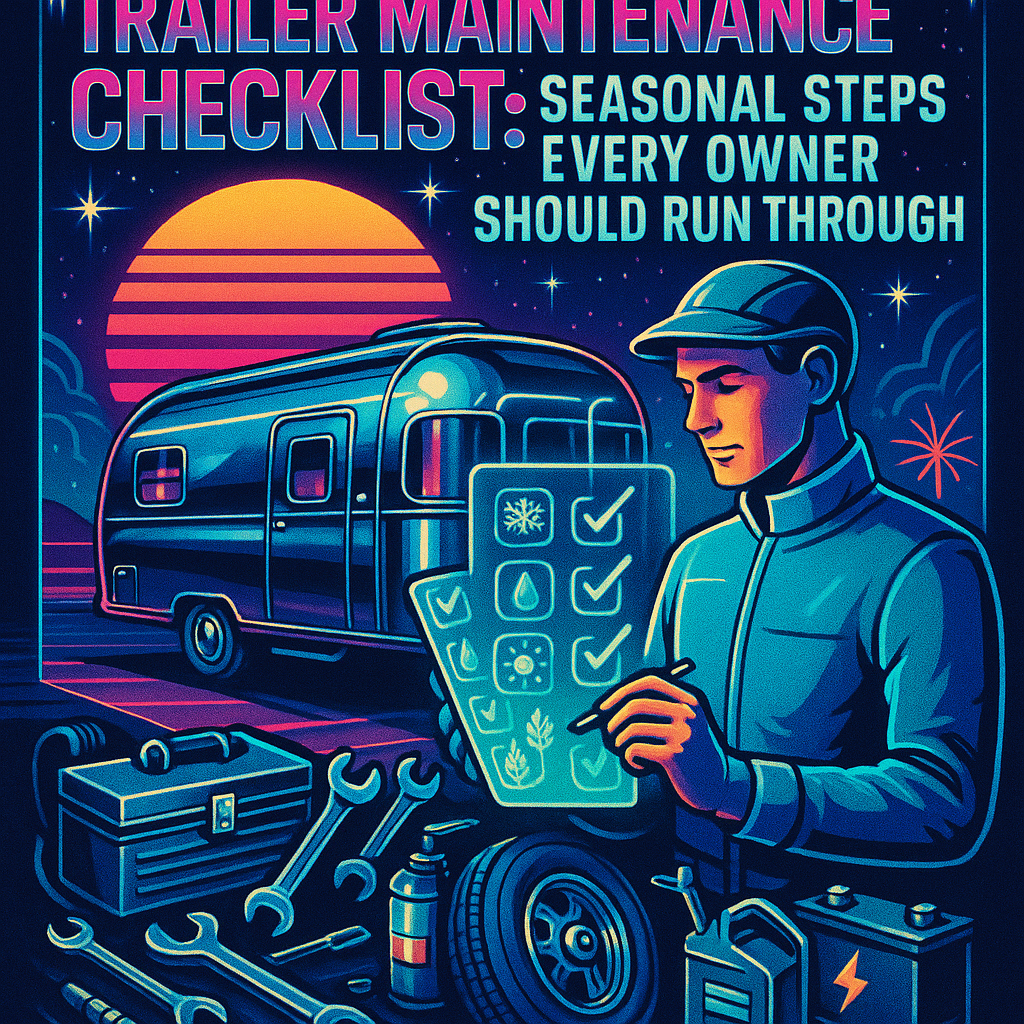
Trailer Maintenance Checklist: Seasonal Steps Every Owner Should Run Through
I remember the spring after a long winter when a contractor called me from a job site. His tandem-axle trailer had a flat and a seized jack. He lost two hours, a client asked him to leave, and he picked up costly one-off fixes that could have been avoided. That morning taught me the value of a simple, repeatable trailer maintenance checklist you run with the season.
This article lays out an operator-friendly trailer maintenance checklist you can use every spring and fall. It focuses on things you can inspect and fix with basic tools, and it explains why each item matters to uptime, safety, and the bottom line.
Why a seasonal trailer maintenance checklist matters
Trailers sit more than trucks. Weather, salt, and parked weight create problems that appear slowly. Small failures become big interruptions when they happen on a job.
A seasonal ritual reduces surprise downtime. It also makes budgeting predictable. You swap emergency repairs for planned parts and a morning of labor. That keeps you on schedule and keeps clients from thinking you are unreliable.
Spring checklist: get it road-ready after storage
Start with cleanliness. Wash frame rails, axles, and the underside to remove salt and grit. Corrosion hides under grime and starts at welds and fastener heads.
Inspect tires next. Look for cuts, flat spots, and cracking on the sidewalls. Check tread depth and verify tire pressure when cold. Tires can age out even without miles. Replace any tire with visible dry rot.
Check wheel bearings and hubs. Listen for roughness while spinning and feel for free play. If you haven’t repacked bearings in 12 months or 12,000 miles, do it now. A failed bearing will strand you and take the hub with it.
Verify brakes. On electric systems, exercise controllers and confirm wiring connectors stay tight. On hydraulic or surge systems, look for leaks and test operation under load. Adjust or replace pads and shoes when they show uneven wear.
Test lights and wiring. Moisture-driven connectors fail first. Wiggle plugs while testing each circuit. Replace corroded connectors and use dielectric grease on terminals.
Grease pivot points and hinges. Lubricate the jack, coupler latch, and suspension pivots. This keeps parts moving freely and prevents bind that turns into breakage.
Inspect the coupler and safety chains. Check the latch engagement and the twist of the chains. Replace any chain that shows thinning or kinks.
Document everything. Use a simple log that notes date, odometer, and work done. This helps build a maintenance history you can sell or use to defend warranty claims.
Fall checklist: prepare for storage and winter work
Remove debris and clean the bed. Organic matter traps moisture and accelerates corrosion under the floor and around fasteners.
Re-check tires for pressure and signs of sun damage. If you store the trailer, inflate tires to the manufacturer’s recommended pressure and consider chocking or moving the trailer periodically to prevent flat spots.
Protect electrical connections. Apply moisture displacement spray and cover exposed plugs. If the trailer will sit outside, protect the battery and disconnect it if possible to avoid freeze damage.
Inspect seals and the roof. Water intrusion shows up as delamination, soft spots, or peeling. Re-seal vents, seams, and roof edges now to avoid freeze-thaw damage.
Service brakes and bearings again if you run year-round. Cold weather changes braking feel. Make adjustments before the first deep freeze.
Store tools and loose gear inside or in weatherproof boxes. Loose items can shift and damage flooring or wiring when you tow from cold to warm conditions.
Mid-season checks and quick daily habits that save hours
Do a quick walk-around before every trip. Confirm lights, load security, and tire condition. That one-minute routine stops many roadside failures.
Carry a small kit. Include a spare lug wrench, tire plug kit, basic hand tools, zip ties, and a few fasteners that match your trailer. They let you limp through a day without returning to base.
Watch for new noises. Squeaks and clunks are early indicators. Address them before they escalate into broken parts.
Use visual cues. Fresh grease, shiny metal at pivot points, or new rust streaks tell a maintenance story. Train crews to report anything that looks out of place.
How to organize a checklist so your team actually uses it
Keep the checklist short and mobile. A one-page sheet clipped to a clipboard or a photo of the list on a phone works best. Long forms never leave the truck.
Tie tasks to the schedule. Mark spring and fall inspections on the calendar and assign a responsible person. Make the expectation clear. Routine work needs an owner.
Train with a hands-on session. Walk a new hire around the trailer and point out what a bad bearing or a cracked leaf spring looks like. Experience beats reading a sheet.
Track expenses. Record part costs and labor minutes for each inspection. Over time you will see which items recur and which upgrades deliver the best uptime return.
Also, remember that taking the lead on small things keeps you from reacting to large ones. Strong leadership matters when you set standards for trailer care. And keep visibility for your business online so potential clients find you with clear information about your capabilities and reliability through good seo.
Closing insight: make the checklist a source of uptime, not paperwork
A seasonal trailer maintenance checklist is not paperwork you file. It is a tool you use to keep tools working. Build a short, repeatable routine. Teach crews how to spot trouble. Replace parts on a predictable cycle.
When you treat inspections as part of the job, you avoid emergency stops, protect margins, and keep clients trusting your schedule. That contractor who lost hours the spring before learned this the hard way. After two seasons of disciplined checks he stopped carrying the anxiety of whether a trailer would fail him on site.
Do the same. The next season will feel easier because you made the work predictable. Your uptime will improve and small, regular investments will beat the cost of surprise repairs every time.