Author: jeff@rabason.com

  • Trailer Maintenance Plan That Saves Time and Prevents Breakdowns

    Trailer Maintenance Plan That Saves Time and Prevents Breakdowns

    Trailer Maintenance Plan That Saves Time and Prevents Breakdowns

    I learned the hard way that a trailer maintenance plan is not a nice-to-have. It is the difference between a weekend job running on schedule and a Monday that eats your week. One cold morning I found a flat trailer tire and a snapped safety chain on a job site. That day cost hours, two labor crews, and an embarrassed client. The repairs taught me how to build a plan that keeps trailers working and businesses moving.

    Start with the problem: small failures become big delays

    A loose lug or a worn bearing rarely looks urgent. You tighten a bolt and move on. Over weeks those small defects compound. Tires wear unevenly when axles sit out of alignment. Bearings run hot and then seize. Chains stretch until they break. Each small failure adds up to a breakdown that happens at the worst possible time.

    Treating minor issues as part of a maintenance plan changes your perspective. You stop managing crises and start preventing them. That saves money and protects your reputation.

    Build a practical trailer maintenance plan that fits your operation

    A plan must match your workload. A landscaper hauling mulch daily needs a different cadence than a contractor who moves equipment once a week. Start by listing every trailer component that can fail. Tires, wheels, bearings, lights, brakes, couplers, chains, floorboards and electrical connectors belong on that list.

    Set inspection intervals by use. For heavy daily use inspect tires, lights and couplers each morning. For moderate use schedule a full checklist every 30 days. For storage or seasonal downtime inspect before the season starts. Write these intervals into a simple logbook or digital note so nobody guesses when something was last checked.

    Record what you find. A quick note that a bearing sounded rough or that a tire had a small bulge saves time later. The log becomes a history you can use to predict failures and budget replacements.

    Daily checks that take five minutes and stop hours of downtime

    Make a five-minute pre-trip check mandatory. Walk around the trailer. Touch the tires. Look at the lights. Verify the hitch and safety chains. The small checks you do every day catch fast-developing issues before they strand you.

    Tires deserve special attention. Feel for soft spots. Check sidewalls for cracks. Use a pressure gauge instead of guessing. Low pressure increases heat and accelerates failure. Tighten wheel lug nuts after the first short trip when wheels are new or recently serviced.

    Lights and wiring fail from corrosion. Pull a connector apart and spray contacts with dielectric grease if you see green or white corrosion. Replace brittle sockets. Good lighting keeps you legal and prevents accidents.

    Scheduled maintenance tasks that extend trailer life

    Plan routine service tasks and stick to the dates. Grease wheel bearings on the schedule recommended for your load and mileage. Replace brake shoes and drums when wear reaches manufacturer limits. Inspect suspension for loose bolts or cracked hangers. Replace worn floorboards before they rot through.

    When you change anything, update the log. That helps when you or a technician needs to diagnose a recurring issue. Over time the log points to patterns. Maybe one axle carrier wears faster because of poor road conditions. Patterns let you adapt the plan to your reality.

    Train your crew and build simple accountability

    A maintenance plan fails without people who understand and follow it. Train every operator to run the five-minute check and to add clear notes to the log. Use concise language. Teach what problems look like and which ones require immediate service.

    Assign one person to review logs weekly. That person flags green-light items for immediate action and schedules larger repairs. Accountability keeps checks from becoming suggestions.

    When you teach maintenance, include small leadership lessons about responsibility and pride in equipment. Clear expectations get better results than vague rules. Good leadership produces consistent care without nagging. See how leadership principles translate into daily routines in more depth at leadership.

    Use data to make smarter replacement decisions

    A logbook becomes a data source. Track how long tires last, when bearings fail, and which couplers need work most often. That data tells you whether cheaper parts cost you more in downtime.

    If your business relies on online visibility for hauling contracts, correlate maintenance windows with booking patterns. A basic understanding of seo helps you schedule service during slow periods and protect peak dates.

    Make replacement decisions based on total cost of ownership. A more durable trailer component can still be the cheaper option when it reduces emergency hauls and last-minute rentals.

    Closing: maintenance is leadership in motion

    A strong trailer maintenance plan changes how your days go. You move from reacting to planning. You reduce emergency repairs. You keep crews working and clients happy. Start with daily checks, follow a schedule, log everything, and assign accountability. Over a season those small steps compound into real reliability. That reliability is the practical edge every trailer-dependent business needs.

    By treating maintenance as an operational discipline you protect time and reputation. Do the simple things often. The breakdowns you prevent will pay for the time you invest.

  • How Accounting Firms Can Build a Clear Path to Cash Advisory Services

    How Accounting Firms Can Build a Clear Path to Cash Advisory Services

    Accounting firms that want to move beyond compliance work are facing a familiar challenge: how to turn advisory ambitions into a repeatable business model. The conversation is no longer about whether firms should offer cash-flow guidance, but how they can do it in a way that is structured, profitable, and sustainable. A recent Insightful Accountant article frames that shift as part of a broader ecosystem conversation, where tools, workflows, and client expectations all need to align.

    For firms exploring that transition, the key is not to treat cash advisory as an isolated add-on. It has to be built into the firm’s operating model, from intake and client selection to reporting cadence and communication. That is where many practices stall: they have the expertise, but not yet the system.

    Advisory Starts With a Defined Client Fit

    Not every client is ready for cash advisory, and not every firm should try to position it as a universal service. The most effective firms begin by identifying clients who already feel the pain points that advisory work can solve: uneven cash visibility, delayed collections, seasonal volatility, or uncertainty around short-term decisions.

    That screening process matters because advisory services are most valuable when they are tied to a specific operational need. Firms that try to sell cash-flow support too broadly often find the service difficult to explain and even harder to deliver consistently.

    A strong client-fit framework typically includes:

    • Businesses with recurring cash constraints or timing issues
    • Owners who want more frequent financial visibility
    • Clients already using digital accounting systems that support timely reporting
    • Engagements where the firm can influence decisions, not just record history

    This approach does two things. First, it protects the firm from stretching too far outside its capacity. Second, it creates a more credible advisory offer because the service is aimed at clients who can clearly benefit from it.

    Workflow Discipline Turns Advice Into a Service

    A common mistake in advisory expansion is assuming that good judgment alone is enough. In practice, cash advisory requires a repeatable workflow. Without one, the service becomes dependent on individual effort, which makes it difficult to scale or standardize.

    The strongest models typically rely on a consistent cycle: gather financial data, review cash position, identify near-term risks, and translate those findings into actionable recommendations. That cadence can be weekly, monthly, or tied to client-specific milestones, but it must be deliberate.

    This is also where technology and process intersect. Firms need systems that support real-time or near-real-time visibility, but software alone does not create value. The real differentiation comes from how the firm interprets the numbers and communicates them in a way clients can use.

    For that reason, many firms are refining their advisory stacks and exploring resources that help them connect services to execution. One example is CashFlowMike, which reflects the growing demand for practical cash-focused guidance rather than abstract financial commentary.

    Communication Is Part of the Product

    Cash advisory is not only about analysis. It is also about how clearly the firm can explain what the numbers mean and what should happen next. Clients do not pay for complexity; they pay for clarity.

    That means firms need to think carefully about the format of their deliverables. A dense report may check a box, but a concise dashboard, a focused call, or a short action list can be far more valuable. The goal is to help clients make decisions with confidence, not overwhelm them with data.

    Successful advisory communication often has three characteristics:

    1. It is timely and tied to current cash conditions.
    2. It is specific enough to guide action.
    3. It is understandable to business owners who are not finance professionals.

    When firms get this right, they move from being seen as historical record-keepers to strategic partners. That shift can deepen client relationships and create a stronger basis for recurring advisory revenue.

    Building A Practical Path Forward

    The move into cash advisory does not require a complete reinvention of the firm. It requires focus. Firms that succeed usually begin with a narrow service definition, a small client segment, and a disciplined delivery process. From there, they refine the model as they learn what clients respond to and what the team can support.

    The broader lesson is that advisory growth depends on alignment. The service offering, technology stack, pricing model, and client communication all need to work together. When they do, cash advisory becomes less of an experiment and more of a business line.

    For firms considering that next step, the opportunity is real, but so is the need for structure. A clear path to cash advisory is built one workflow, one client, and one conversation at a time.

  • EndoDyne and the Next Question in Human Evolution: When Adaptation Becomes Conscious

    EndoDyne and the Next Question in Human Evolution: When Adaptation Becomes Conscious

    The discussion around human evolution has long moved beyond biology alone. In contemporary writing, it increasingly includes cognition, technology, ethics, and the possibility that evolution itself may be shaped by conscious choice. That is the frame explored in Jeffrey Robertson’s EndoDyne: When Evolution Becomes Conscious, a piece that invites readers to consider what happens when adaptation is no longer passive but deliberate.

    From Biological Change To Conscious Design

    For most of history, evolution was understood as a slow, impersonal process driven by natural selection. Traits persisted because they improved survival, not because organisms planned for the future. But modern life has complicated that view. Humans now shape their own environments, alter their bodies through medicine, and extend their capabilities through digital systems.

    This shift has made evolution harder to describe in purely biological terms. Language, tools, education, and technology all influence what individuals and societies are able to become. The result is a broader interpretation of adaptation: not only the survival of the fittest, but the survival of the most responsive.

    In that context, the idea of consciousness becomes central. If human beings can recognize the direction of change, they can also influence it. That does not mean evolution stops being natural. It means the line between natural process and intentional design is becoming increasingly difficult to draw.

    Why The Idea Resonates Now

    The appeal of a concept like EndoDyne lies in its timing. People are living through a period of rapid change in which biology, identity, and intelligence are being redefined in real time. Advances in biotechnology, artificial intelligence, and neurotechnology are forcing a new set of questions about what it means to improve, to adapt, and to remain human.

    Rather than treating these questions as abstract, the conversation becomes practical. How much of human development is inherited, and how much is chosen? At what point does enhancement become transformation? And if consciousness can shape outcomes, who gets to decide the direction of that influence?

    These are not speculative concerns confined to science fiction. They are already present in debates around healthcare, data, cognitive performance, and the ethics of emerging technologies. A framework that considers evolution as conscious rather than accidental gives readers a way to organize those debates without reducing them to simple optimism or fear.

    Adaptation As A Human Skill

    One of the most compelling aspects of this conversation is that adaptation itself can be seen as a skill. Humans do not merely react to conditions; they interpret them, learn from them, and build systems to respond more effectively in the future.

    That has always been true in education, engineering, and medicine. What changes in the present era is the speed and scale at which adaptation occurs. Individuals are now expected to adjust to new tools, new norms, and new forms of intelligence with unprecedented frequency. Conscious evolution, in this sense, is not just a theory about biology. It is a description of modern survival.

    A Framework For Responsibility

    Any discussion of conscious evolution also raises a harder issue: responsibility. If human beings are increasingly capable of directing change, they inherit the obligation to do so carefully. Power without reflection can produce inequality, overreach, and unintended consequences.

    That is why this subject cannot be separated from ethics. Technological progress does not automatically produce human progress. It can also amplify bias, concentrate control, and accelerate systems that are poorly understood. A serious examination of evolution as a conscious process should therefore include not only possibility, but restraint.

    This is where thoughtful cultural analysis matters. By linking innovation to philosophy, writers like Robertson encourage a more disciplined approach to the future. Instead of treating transformation as an inevitable force, the discussion shifts to stewardship: what kind of future should be built, and by what values?

    The Value Of The Question Itself

    Even when a concept resists easy definition, it can still be useful if it sharpens attention. The strength of EndoDyne is not that it provides a final answer, but that it reframes an old question in a contemporary way. Evolution is no longer something people only inherit. In many areas of life, it is something they participate in.

    That perspective has broad appeal because it sits at the intersection of science, identity, and imagination. It asks readers to consider whether consciousness is simply a byproduct of evolution, or whether it has become one of evolution’s active instruments. The answer may differ depending on the field of inquiry, but the question itself is significant.

    For readers interested in the relationship between human development and intentional change, Jeffrey Robertson’s article on EndoDyne offers a starting point for further reflection. As technology and biology continue to converge, the idea that evolution may be becoming conscious feels less like a metaphor and more like a serious lens through which to view the future.

    What follows from that recognition is not certainty, but responsibility. If the next stage of human development is shaped by awareness, then the most important task may be learning how to guide change without losing sight of what should remain human.

  • How Roanoke Homeowners Can Choose the Right Remodeling Contractor

    How Roanoke Homeowners Can Choose the Right Remodeling Contractor

    Hiring a remodeling contractor is one of the most important decisions a homeowner can make. The right professional helps keep a project on schedule, on budget, and aligned with the property’s long-term value, while the wrong one can create costly delays and frustration. For homeowners in the Roanoke area, the process starts with knowing what to look for before signing any agreement.

    Start With Clear Project Goals

    Before reaching out to contractors, homeowners should define the scope of the project as clearly as possible. A kitchen update, bathroom renovation, basement finish, or full-home remodel each comes with different timelines, permitting needs, and levels of coordination.

    It helps to identify the must-haves, preferred materials, and budget range early. A contractor can provide a more accurate estimate when the homeowner can explain whether the goal is a simple refresh, a functional redesign, or a larger structural change.

    Evaluate Experience and Local Knowledge

    Not every contractor is the right fit for every job. Experience with the specific type of remodel matters because each project category comes with its own technical and logistical challenges. A contractor who regularly handles the work a homeowner needs is more likely to anticipate common issues and recommend practical solutions.

    Local experience is also valuable. Contractors who work in Roanoke and surrounding communities are more likely to understand regional building practices, permit requirements, and the expectations of local homeowners. That familiarity can make the process smoother from planning to final inspection. For a more detailed checklist, homeowners can review this guide to choosing the right remodeling contractor in Roanoke, VA.

    Ask The Right Questions Before Hiring

    Initial consultations are the best opportunity to assess whether a contractor is organized, responsive, and transparent. Homeowners should use that conversation to ask direct questions about experience, scheduling, communication, and the proposed workflow.

    Useful topics include:

    • How long the contractor has been handling similar remodels
    • Whether the contractor will manage permits and inspections
    • Who will be the main point of contact during the project
    • How changes to the original plan are handled
    • What the payment schedule looks like
    • Whether the contractor uses subcontractors for any part of the work

    The answers should be specific and easy to understand. A professional contractor should be willing to explain the process without pressuring the homeowner to move quickly.

    Review Estimates And Communication Style

    Price matters, but the lowest bid is not always the best value. A careful estimate should outline labor, materials, and major allowances in enough detail for the homeowner to compare offers fairly. If one proposal is significantly lower than the others, it may leave out important work or use less durable materials.

    Communication is just as important as price. Remodeling projects often involve decisions that need quick approvals, and delays can affect the schedule. Homeowners should look for a contractor who responds promptly, explains next steps clearly, and sets realistic expectations from the beginning.

    A written estimate, contract, and change-order process are all signs of a contractor who takes the work seriously. These documents help prevent misunderstandings and provide a clear record if questions come up later.

    Check Reputation And Protect The Investment

    References and reviews can offer useful context, especially when they confirm consistent results over time. Homeowners should look for patterns in feedback rather than focusing on a single comment. Repeated praise for punctuality, craftsmanship, or communication is a positive sign, while recurring complaints deserve attention.

    It is also wise to confirm that the contractor carries the appropriate licensing and insurance for the work being performed. Proper coverage protects both the homeowner and the crew in case of accidents or property damage. A reputable contractor should be able to provide proof without hesitation.

    Once a contractor is selected, the final agreement should spell out the scope of work, timeline, payment terms, and process for handling unexpected issues. That level of clarity gives the homeowner a stronger foundation for a successful project.

    Choosing the right remodeling contractor is less about luck than preparation. Homeowners who define their goals, compare estimates carefully, and ask direct questions are in a better position to hire a contractor who can deliver quality results. In a market like Roanoke, where homeowners want both craftsmanship and reliability, a careful selection process is one of the best ways to protect the investment and reduce stress from start to finish.

  • Why Cash Flow Discipline Matters in Small Business Management

    Why Cash Flow Discipline Matters in Small Business Management

    Small businesses rarely fail because they lack a good idea. More often, they run into trouble because the money coming in and the money going out are not managed with enough discipline. That is why cash flow remains one of the most important subjects in business operations, and why recent commentary such as Cashflow Mike’s take on Caleb Hammer’s business cash flow insights resonates with owners who want practical guidance rather than theory.

    Cash flow is not just an accounting term. It is the day-to-day reality that determines whether a business can pay staff, restock inventory, cover taxes, and keep the lights on. A company can show profit on paper and still struggle to survive if payments arrive too late or expenses outrun available cash. That gap between profit and liquidity is where many otherwise promising businesses get into trouble.

    Cash Flow Is a Management Issue, Not Just a Finance Issue

    One of the clearest lessons business owners can take from discussions about cash flow is that it cannot be treated as a back-office concern only. Sales teams, operations managers, and founders all influence how cash moves through a company. Payment terms, inventory decisions, and hiring plans each affect the timing of cash inflows and outflows.

    When cash flow is handled well, leaders make decisions based on timing, not just totals. A contract that looks profitable may still be risky if payment will not arrive for 60 or 90 days while expenses are due immediately. Likewise, a sudden hiring decision may feel justified by projected growth but still strain the business if current receivables are weak. Strong cash flow management forces those realities into the open before they become emergencies.

    Forecasting Beats Guesswork

    The simplest way to improve cash flow discipline is to forecast it regularly. A cash flow forecast does not need to be complex to be useful. It should show expected receipts, fixed expenses, variable expenses, debt obligations, and planned investments over a defined period.

    That exercise helps business owners answer practical questions:

    • Will there be enough cash next month to cover payroll?
    • Are customer payments arriving on time, or are collections slowing down?
    • Do planned purchases need to be delayed until reserves improve?
    • Is the business relying too heavily on future revenue that has not yet been secured?

    Forecasting turns cash flow from a surprise into a schedule. Even a basic weekly or monthly view can reveal pressure points early enough to act.

    Profitability Alone Does Not Protect a Business

    A common mistake among newer owners is assuming that profitable sales automatically create financial stability. In reality, profit and cash are related but not identical. Revenue can be booked before cash is received, and expenses can hit before the matching income is collected. That mismatch can create a misleading picture of success.

    This is why cash flow discussions are so valuable for growing companies. A business can improve margins and still face a cash squeeze if customers pay slowly, inventory sits too long, or overhead expands faster than collections. Understanding that difference helps owners avoid overextending themselves during periods of growth.

    Healthy businesses pay close attention to the quality of their revenue, not just the amount. That means evaluating whether customers pay reliably, whether contracts are structured sensibly, and whether working capital is sufficient to support the sales model. Growth is only useful when the business can finance it.

    The Role of Collections and Payment Terms

    Businesses often have more control over cash flow than they realize. One of the most effective levers is how payment terms are set and enforced. If a company offers extended terms without adequate follow-up, it may be funding customers’ operations at its own expense.

    Improving collections does not have to mean being aggressive. It can involve clearer invoicing, earlier reminders, tighter credit checks, and better communication with customers. The goal is to shorten the time between delivering value and receiving cash for it.

    Payment terms should also match the business model. A company with thin margins and high overhead may not be able to absorb long receivable cycles. In that case, terms, deposits, or milestone billing may be necessary to protect operations.

    Practical Discipline Creates Resilience

    The businesses that manage cash flow well tend to share a few habits. They know their numbers, they monitor trends consistently, and they make decisions before pressure becomes a crisis. They do not wait for a bank balance to become uncomfortable before addressing the underlying issue.

    That discipline shows up in several ways. Owners keep an eye on receivables aging, review expenses regularly, and preserve reserves when possible. They also distinguish between spending that supports growth and spending that merely creates activity. Those differences matter because cash flow rewards patience, discipline, and timing.

    It is also important to treat cash flow as an ongoing conversation, not a one-time fix. Market conditions shift, customer behavior changes, and operating costs evolve. A business that reviews cash flow only during difficult periods is already behind. Consistent attention makes the company more adaptable and less vulnerable to shocks.

    A thoughtful perspective on cash flow can help owners avoid many of the common mistakes that limit growth. That is why discussions like Cashflow Mike’s analysis of what Caleb Hammer gets right about business cash flow are useful for entrepreneurs who want a practical lens on financial decision-making.

    Business success depends on more than sales volume or headline profitability. It depends on having enough real cash, at the right time, to support the work the business needs to do. Owners who understand that distinction are better positioned to grow with stability, make smarter decisions, and avoid preventable financial stress.

  • How Financial Reports Can Improve Cash Flow Decisions for Small Businesses

    How Financial Reports Can Improve Cash Flow Decisions for Small Businesses

    Small businesses often focus on revenue first, but cash flow is what keeps operations stable from week to week. Financial reports can help owners move beyond guesswork and make decisions based on what is actually happening inside the business. A clear understanding of the numbers can reveal when to spend, when to hold back, and where pressure is building.

    Why Financial Reports Matter Beyond Compliance

    Financial reports are sometimes treated as a bookkeeping requirement, but they are far more useful than that. A profit and loss statement, balance sheet, and cash flow statement each show a different part of the business story. Together, they help owners identify whether growth is supported by real liquidity or simply by delayed obligations and timing differences.

    For many businesses, the challenge is not a lack of sales. It is a mismatch between income on paper and money available to cover payroll, inventory, taxes, and vendor payments. Reports make that mismatch visible, which gives leaders a chance to adjust before the problem becomes urgent.

    A practical overview of this idea is explored in Almost Helpful Financial Reports for Cash Flow Decisions, which emphasizes how businesses can use reporting with greater purpose rather than treating it as a routine task.

    The Reports That Shape Better Cash Flow Decisions

    Different reports support different decisions, and the value comes from reading them together rather than in isolation. The profit and loss statement shows whether the business is generating earnings over a set period, but it does not always show when cash enters or leaves the account. That distinction matters when payments are delayed or expenses hit before revenue arrives.

    The balance sheet helps owners understand what the business owns, owes, and retains at a point in time. This can be especially useful for spotting rising debt levels, shrinking reserves, or inventory that is tying up too much capital. These details often explain why a business can appear healthy while still feeling short on cash.

    The cash flow statement is the most direct tool for cash management. It shows how money moves through operations, investing, and financing activities. When reviewed regularly, it can help identify whether daily operations are funding the business or whether external financing is filling a gap.

    Common Questions These Reports Can Answer

    • Are customers paying fast enough to support current expenses?
    • Is inventory absorbing cash that could be used elsewhere?
    • Are loan payments becoming too heavy relative to operating income?
    • Is growth creating more strain than return in the short term?

    When these questions are answered with data, decisions become more deliberate. Owners can renegotiate terms, adjust spending, improve collections, or reconsider expansion plans based on evidence instead of instinct.

    Turning Reports Into Action

    The real value of financial reporting comes when the information leads to action. A report reviewed once a quarter may be helpful, but a more regular rhythm often gives leaders enough time to respond before cash becomes constrained. Many businesses benefit from a monthly review cycle, with weekly checks on receivables, payables, and account balances where needed.

    Reports are also most effective when paired with simple operational questions. If margins are shrinking, is the issue pricing, labor, or supplier costs? If cash is tight, is the business waiting too long to invoice or allowing customers too much time to pay? If revenue is rising but reserves are falling, is too much cash tied up in expansion costs?

    These kinds of questions turn reporting from a static record into a management tool. Instead of asking only what happened, leaders begin asking why it happened and what should change next.

    Practical Ways Businesses Can Use Reports

    1. Track receivables aging to spot collection delays early.
    2. Compare monthly operating cash inflows and outflows for patterns.
    3. Review inventory levels to avoid overbuying.
    4. Watch recurring expenses for unnoticed creep.
    5. Revisit payment terms with suppliers and customers when cash timing is under pressure.

    None of these steps requires complicated modeling. The key is consistency. When the same reports are reviewed over time, trends become easier to see and decisions become more confident.

    Building A Better Reporting Habit

    Strong cash flow management usually starts with discipline, not complexity. Businesses that rely on reports to guide decisions tend to move faster because they can see problems forming earlier. They also gain a clearer sense of which activities actually support liquidity and which ones simply add volume.

    That discipline matters in periods of growth as much as in periods of stress. Rapid expansion can strain working capital, while slower periods can create blind spots if reports are ignored. In both cases, timely reporting gives owners a more accurate picture of what the business can support.

    The best financial reports do not just record history. They help leaders make practical choices about hiring, pricing, borrowing, saving, and spending. That is why cash flow decisions improve when reporting is treated as a core management habit rather than a back-office formality.

    For businesses looking to strengthen that habit, the guidance in Almost Helpful Financial Reports for Cash Flow Decisions offers a useful framework for thinking about the numbers in a more decision-focused way.

    In the end, better cash flow usually comes from better visibility. When financial reports are read carefully and used consistently, they can give businesses the clarity needed to protect liquidity, manage growth, and make smarter choices with confidence.

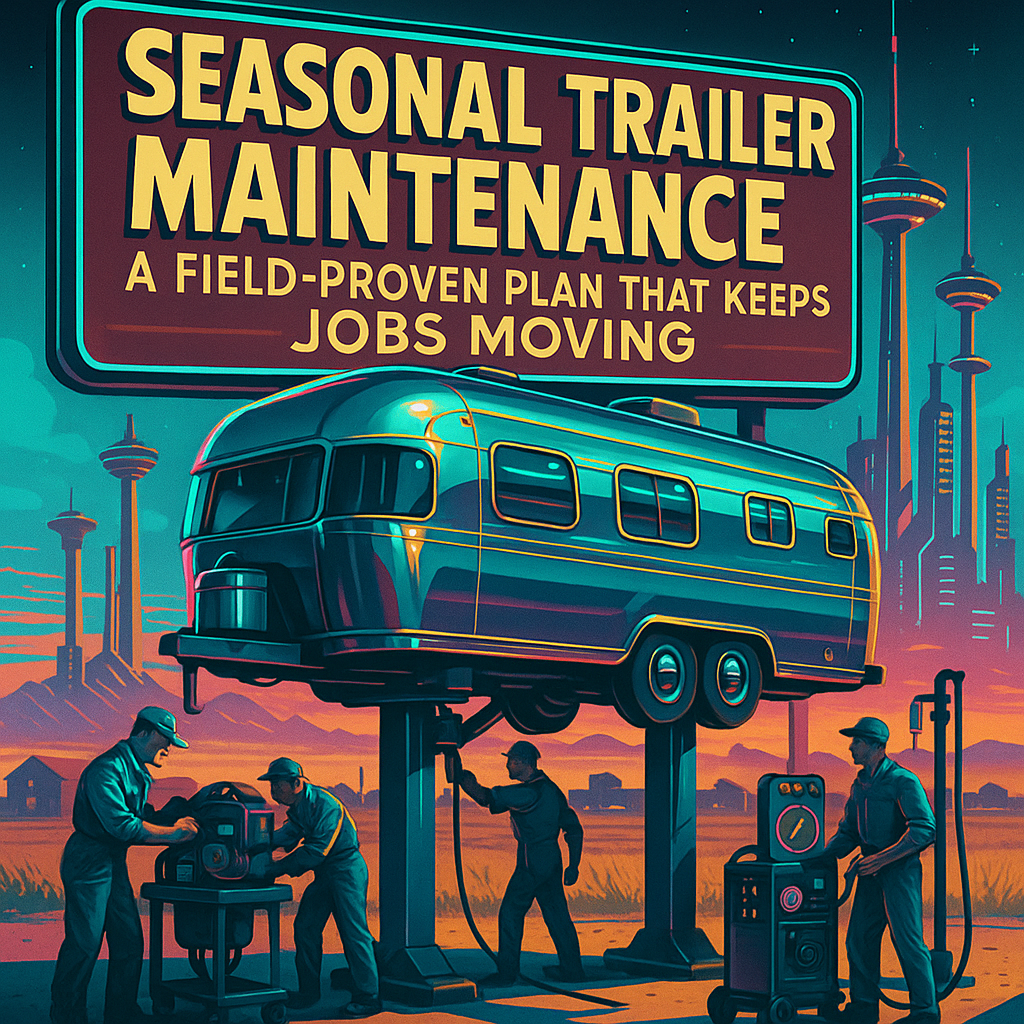
  • Seasonal Trailer Maintenance: A Field-Proven Plan That Keeps Jobs Moving

    Seasonal Trailer Maintenance: A Field-Proven Plan That Keeps Jobs Moving

    Seasonal Trailer Maintenance: A Field-Proven Plan That Keeps Jobs Moving

    I learned the value of seasonal trailer maintenance the hard way. Mid-October, a loaded utility trailer lost a bearing on a gravel road three miles from a jobsite. The crew waited six hours while a replacement part came from town. The job lost a day and the client’s trust cost more than the tow bill.

    This article lays out a practical, seasonal maintenance plan for trailer owners and operators who rely on trailers to earn an honest living. The goal is simple. Reduce roadside failures, lengthen component life, and make maintenance part of the rhythm instead of an emergency.

    Why seasonal trailer maintenance matters for working businesses

    Trailers live in a harsh environment. Salt, mud, vibration, and heavy loads accelerate wear in ways a shop lift won’t always reveal. Left unchecked, small problems become service calls, lost time, and customer headaches.

    Seasonal planning forces inspections at predictable intervals. That consistency catches worn parts earlier, spreads labor across the year, and lets you schedule downtime when it hurts the least.

    A four-step seasonal maintenance rhythm you can follow

    Align checks with seasons and business cycles rather than calendar dates. For most operations, break the year into spring, summer, fall, and winter tasks. Each visit takes 30–90 minutes per trailer depending on trailer type.

    Spring: Prepare for high-use months

    Start with brakes, bearings, lights, and tires. Remove hub caps and inspect bearings for grease condition and play. Replace seals or repack bearings if the grease looks contaminated.

    Check brake adjustment and shoes or pads. Electric brakes need a hands-on test with the appropriate controller. Confirm wiring connectors are clean and free of corrosion.

    Inspect tires for sidewall cuts and verify tread depth. Rotate or replace before summer workloads peak.

    Summer: Monitor load-driven wear

    Summer is when trailers earn money. Do a mid-season quick check that focuses on hitch components, suspension hangers, and fasteners. Tighten U-bolts and check welds for cracks.

    Carry spares: a hub kit, a master cylinder (if hydraulic), and at least one tire. Being able to swap a failed component on-site saves hours.

    Fall: Harvest time for preventive servicing

    After the busy season, perform deeper service. Clean and repack bearings if needed. Replace worn brake components and service lights. Repaint or touch up exposed metal to stop rust from spreading.

    This is the right time to replace worn tires and update registration or inspection stickers so trailers start the slow season in good shape.

    Winter: Protect and store the trailer

    If a trailer sits through winter, protect the running gear. Grease moving parts, drain and dry wiring connectors, and store the trailer on blocks to take weight off the tires.

    If you operate year-round, schedule smaller but frequent checks focused on de-icing exposure. Salt is the enemy. A quarterly undercarriage rinse and an anti-corrosion inspection will prevent hidden failures.

    Practical tactics that save time and money

    The right habits reduce surprises. First, make a simple inspection sheet you can run through in five minutes. Train your crew to do it every time a trailer returns to the yard.

    Keep a small parts chest stocked with the most failure-prone items. Buy generic axle nut kits, seals, bulbs, fuses, and a spare hub bearing set. Over time, the upfront cost is tiny compared to lost billable hours.

    Label components with the date of last service. You will stop guessing when bearings were last repacked. A small whiteboard in the shop works as well as a digital log for many small shops.

    Systems and soft skills: scheduling, leadership, and visibility

    Maintenance succeeds when someone owns it. Assign responsibility for seasonal checks and make the schedule visible. A foreman who tracks the maintenance calendar prevents it from becoming an afterthought.

    Use simple data to make decisions. Track roadside calls and their root causes for a year. The patterns will tell you which parts to stock and which tasks to prioritize. Pair those observations with basic seo best practices if you publish service reminders or schedules online. Clear, searchable pages help customers and crew find your guidelines when they need them.

    A mid-sized shop’s real-world checklist (example)

    Hitch: Inspect for wear, replace worn pins, and torque couplers to spec.

    Axles and bearings: Check for play, repack or replace as needed.

    Brakes: Verify adjustment, inspect shoes/pads and hardware.

    Wheels and tires: Check pressure, tread depth, and lug torque.

    Lights and wiring: Look for corrosion at connectors and secure ground straps.

    Frame and welds: Scan for cracks and corrosion. Touch up paint where needed.

    Document each item with date and initials. This takes discipline early but saves big later.

    Closing insight: make maintenance predictable so your business stays reliable

    Seasonal trailer maintenance is not a one-time checklist. It is an operational habit that protects revenue and reputation. The discipline of scheduled checks turns roadside emergencies into routine service tasks.

    Start with short, repeatable inspections, assign ownership, and stock the parts you need to fix common failures quickly. Over a season, those small choices add up to fewer lost days and a steadier workflow.

    If you leave one thing in your work truck after reading this, let it be a printed inspection sheet and one spare wheel lug. The rest you build from a predictable maintenance rhythm.

  • The Missing Workflow Inside Most CAS Programs

    The Missing Workflow Inside Most CAS Programs

    Most CAS programs are built to deliver better visibility, cleaner books, and more strategic advisory value. Yet many firms still leave one critical gap unaddressed: the workflow that turns recurring client work into a consistent, repeatable operating system. Without that layer, even strong CAS offerings can feel reactive, overly manual, and difficult to scale.

    The issue is not usually a lack of effort. It is a lack of structure. Firms may have capable people, useful tools, and a solid service menu, but no shared workflow that connects client intake, delivery, follow-up, and accountability into one coherent process.

    Why CAS Programs Stall Without Workflow

    CAS stands for client accounting services, but in practice it is more than bookkeeping or month-end reporting. It often includes cash flow monitoring, vendor management, cleanup work, advisory meetings, and ongoing client communication. Each of those pieces matters, but they are often handled as separate tasks rather than parts of a defined system.

    That fragmentation creates familiar problems. Work gets passed around informally. Deadlines depend on memory instead of process. Team members duplicate effort or miss context. Clients experience inconsistency, even when the underlying service quality is strong.

    The missing workflow is the layer that makes delivery predictable. It defines what happens first, what happens next, who owns each step, and what “done” actually means. In a CAS program, that structure is often the difference between a service line that scales and one that stays dependent on heroic effort.

    The Workflow Most Firms Forget To Build

    Many firms focus on the visible parts of CAS: the dashboards, reports, meetings, and deliverables. What gets overlooked is the operational sequence behind those outputs. A strong workflow should connect the entire client lifecycle, from onboarding to recurring service execution.

    The Core Stages

    A practical CAS workflow usually includes:

    1. Client intake and qualification — identifying whether the engagement fits the firm’s service model.
    2. Scope definition — clarifying responsibilities, timelines, and deliverables before work begins.
    3. Onboarding and setup — gathering access, cleaning up accounts, and standardizing data flow.
    4. Recurring production — completing monthly, weekly, or real-time tasks in a defined order.
    5. Review and escalation — flagging issues, exceptions, and advisory opportunities.
    6. Client communication — ensuring updates are timely, relevant, and consistent.
    7. Renewal or expansion — revisiting scope as the relationship matures.

    When these steps are loosely understood but not formally documented, the program becomes person-dependent. A high performer may keep things moving, but the business does not become more resilient. That is where the workflow gap starts to matter.

    For firms looking to systematize that sequence, resources like Cash Flow Mike often center the conversation around practical cash management and advisory execution rather than isolated bookkeeping tasks.

    Why Process Design Matters More Than More Tools

    It is easy to assume the answer is another platform, dashboard, or automation layer. In many firms, though, the problem is not a shortage of software. It is the absence of a workflow that tells the software what role it should play.

    Tools can speed up tasks, but they do not automatically create clarity. If a firm has not defined the order of work, the criteria for handoffs, or the standards for review, automation can simply make a disorganized process move faster.

    A well-designed CAS workflow does something different. It reduces ambiguity. It gives team members a shared playbook. It helps managers see bottlenecks before they become client problems. It also makes training easier, because new hires can follow the process instead of learning through trial and error.

    This matters especially in advisory-led services, where quality is not measured only by output, but by timing, consistency, and judgment. A clean monthly report is useful. A report that arrives on time, reflects the right data, and leads naturally into a client conversation is far more valuable.

    Building A Workflow That Supports Scale

    The best CAS workflows are not complicated. They are explicit. They define a small number of repeatable steps and make ownership visible at each point.

    Firms often benefit from asking a few direct questions:

    • What triggers each recurring task?
    • Who is responsible for each handoff?
    • What is the required input before work can begin?
    • What is the quality check before the client sees the output?
    • How are exceptions handled when something is missing or late?
    • Where does the workflow create opportunities for advisory insight?

    Those questions are operational, but they also shape the client experience. A firm that can answer them clearly is more likely to deliver consistent service and maintain healthy margins.

    Some firms use structured planning frameworks to map that journey from initial service promise to repeatable execution. That is the kind of operational clarity often associated with Clear Path to Cash, where the emphasis is on building a dependable path from insight to action.

    The point is not to create bureaucracy. It is to remove friction from work that should already be recurring and predictable. In a CAS program, every unnecessary back-and-forth lowers efficiency and raises the risk of missed expectations.

    The Real Payoff

    When the missing workflow is finally built, the benefits reach beyond internal operations. Clients feel it in fewer delays, clearer communication, and more confident recommendations. Team members feel it in less stress and more ownership. Firm leaders feel it in better visibility and fewer surprises.

    Just as important, workflow turns CAS from a collection of tasks into a service model. That shift allows firms to standardize what should be standardized and reserve human judgment for what actually requires it.

    For firms serious about growing CAS offerings, the question is no longer whether the work can be done. It is whether the work can be repeated well, every time, by more than one person, without losing quality. That is the workflow most programs are missing, and it is often the first step toward building a CAS practice that is both credible and scalable.

  • What Client Advisory Services Are and Why Many Firms Struggle to Deliver Them

    What Client Advisory Services Are and Why Many Firms Struggle to Deliver Them

    Client advisory services have become one of the most discussed shifts in the accounting and finance world, but the idea is still often misunderstood. At its core, the model moves a firm beyond compliance work and into ongoing, strategic guidance that helps clients make better decisions. The challenge is not defining the service — it is building a firm that can actually deliver it consistently.

    What Client Advisory Services Really Means

    Client advisory services, often shortened to CAS, refer to a range of recurring advisory offerings that go beyond traditional tax preparation, bookkeeping, or audit support. Instead of focusing only on historical reporting, firms using this model help clients interpret financial information, monitor performance, plan ahead, and respond to business problems before they become emergencies.

    That can include cash flow forecasting, KPI reporting, budgeting, profitability analysis, and management meetings designed to guide decisions. For firms exploring the model, resources from Cash Flow Mike and Clear Path to Cash reflect the growing emphasis on helping clients understand liquidity, planning, and operational visibility rather than simply reviewing what has already happened.

    The appeal is clear. Clients want more than compliance deliverables, especially when they are navigating growth, tight margins, or unpredictable demand. Firms, meanwhile, see an opportunity to deepen relationships, increase recurring revenue, and create more value than a one-time transaction can provide.

    Why Firms Struggle To Make CAS Work

    The difficulty begins with a basic operating mismatch. Many firms were built around project-based work and seasonal deadlines, while advisory services require a repeatable, proactive cadence. That means firms must shift from producing documents to leading conversations, and not every team is prepared for that change.

    A second obstacle is that advisory work is often treated as an add-on rather than a core service line. When that happens, it gets squeezed between tax deadlines, bookkeeping cleanup, and client emergencies. Without clear ownership, pricing, and workflow design, CAS can become a vague promise rather than a defined offering.

    There is also a talent and training issue. Staff who are excellent at compliance may not have the experience or confidence to discuss cash flow strategy, operating metrics, or business planning with clients. Advisory work requires a different skill set: listening, interpreting data, asking better questions, and translating financial information into practical next steps.

    Many firms also struggle with packaging and pricing. Traditional hourly billing can work against advisory services because clients are not buying time; they are buying outcomes, clarity, and ongoing guidance. If the firm cannot explain what is included, how success is measured, and why the service matters, the value proposition becomes hard to defend.

    Common Failure Points

    • Treating advisory as an informal conversation instead of a structured service
    • Offering too many disconnected services without a clear client outcome
    • Failing to build repeatable processes for meetings, reporting, and follow-up
    • Underpricing the work because the value is not fully defined
    • Assigning the work to staff who have not been trained to lead advisory conversations

    Technology can help, but it is not a solution by itself. Dashboards, forecasting tools, and reporting platforms only create value when they are tied to a clear advisory process. Firms that buy software before defining the client experience often end up with more data and less clarity.

    What Successful Firms Do Differently

    Firms that succeed with client advisory services usually start by narrowing the focus. Rather than trying to advise every client on every issue, they identify the business problems they are best equipped to solve. For some, that means cash flow and working capital. For others, it may be budgeting, profitability, or monthly financial review meetings.

    They also build the service around a consistent client rhythm. That usually means recurring meetings, standard reporting packages, defined action items, and a clear follow-up process. The goal is not simply to deliver information, but to create a decision-making framework clients can rely on month after month.

    Successful firms tend to integrate advisory into the broader client relationship instead of isolating it as a separate product. That creates a more natural path from compliance to guidance, especially when the firm can show how financial visibility supports better management decisions. The result is a service that feels less like an upsell and more like a logical extension of the firm’s role.

    Equally important is internal alignment. Leadership has to treat CAS as a priority, not a side project. That usually means investing in training, defining responsibilities, and measuring performance differently. A firm cannot expect advisory growth if every incentive still points toward reactive, deadline-driven work.

    The Strategic Case For Advisory Growth

    Client advisory services are not replacing accounting or finance work; they are changing how that work is delivered. Firms that embrace the model are responding to a market that increasingly expects insight, not just accuracy. The pressure on margins, the need for better decision-making, and the demand for recurring value all point in the same direction.

    The firms most likely to succeed will be the ones that build a clear offer, support it with process and training, and connect it to a concrete client need. That is where advisory stops being a buzzword and starts becoming a durable part of the business.

    For firms considering the transition, the question is less about whether client advisory services matter and more about whether the firm is prepared to operate differently. Those that can make the shift will be better positioned to serve clients who need more than reports — they need guidance they can act on.

  • Operator Syndrome and PTSD: Why Trauma in Veterans and First Responders May Be More Complex Than It Seems

    Operator Syndrome and PTSD: Why Trauma in Veterans and First Responders May Be More Complex Than It Seems

    Many discussions of trauma focus on PTSD as the primary diagnosis, but that framing may not capture the full picture for military personnel, veterans, and first responders. In a recent piece titled Operator Syndrome: What If PTSD Is Only Part of the Story?, Jeffrey Robertson examines a broader set of physical, cognitive, and emotional challenges that can emerge after years of high-stress service. His article raises an important question: what happens when the symptoms commonly labeled as PTSD are only one layer of a more complicated condition?

    Looking Beyond a Single Diagnosis

    PTSD is often the starting point in conversations about trauma because it is widely recognized and clinically established. But many people who have spent years operating in combat, emergency response, or other high-intensity roles describe problems that extend beyond fear, flashbacks, or hypervigilance.

    Those issues can include sleep disruption, irritability, chronic pain, memory problems, emotional blunting, and difficulty reconnecting with family or civilian life. When viewed together, these symptoms may suggest a condition that affects the whole person rather than a single mental health category.

    That is the central idea explored in Robertson’s discussion of Operator Syndrome: the possibility that some service-related struggles are better understood as a layered syndrome involving both mind and body.

    Why The Conversation Matters

    For decades, trauma care has made significant progress in recognizing PTSD and encouraging treatment. That progress has saved lives and helped reduce stigma around seeking support. Still, many operators and responders report that standard treatment paths do not fully address the range of symptoms they experience.

    The issue is not that PTSD is incorrect or unimportant. Rather, it may be incomplete when used as the sole explanation for complex post-service health problems. A person can meet criteria for PTSD and still struggle with hormonal changes, neurological stress, sleep dysfunction, inflammation, or other physical consequences of prolonged operational strain.

    This broader view matters because it can change how clinicians listen, how patients describe their symptoms, and how families interpret what is happening at home. It also helps explain why some people feel frustrated when treatment focuses narrowly on emotional trauma while ignoring physical decline, fatigue, or cognitive fog.

    A More Holistic Way To Understand Recovery

    The idea behind Operator Syndrome points toward a more integrated model of care. Instead of treating symptoms as separate and unrelated, clinicians and support systems may need to look for patterns across several domains at once.

    Common Areas That May Overlap

    • Sleep quality and recovery
    • Mood and emotional regulation
    • Attention, memory, and concentration
    • Physical pain and inflammation
    • Stress tolerance and nervous system activation
    • Relationships, identity, and reintegration after service

    When these problems appear together, a narrow PTSD-only framework may not provide enough context for effective treatment. A holistic model can encourage screening that includes mental health, physical health, and lifestyle factors rather than assuming the root cause is purely psychological.

    That does not mean every veteran or first responder has the same condition, or that every symptom should be grouped under one label. It does mean that people with long-term exposure to extreme demands may benefit from a more detailed assessment than a single diagnosis can provide.

    The Human Cost Of Being Misunderstood

    One of the most difficult parts of complex trauma is the feeling of being misunderstood. People who served in demanding roles often learn to function under pressure, suppress discomfort, and keep moving. Those same traits can make it harder to ask for help when symptoms appear later.

    If a person is told their struggle is only PTSD, they may feel their physical symptoms are being dismissed. If they are told it is only a medical issue, they may feel their lived experience of trauma is being ignored. In reality, many cases likely involve both.

    Robertson’s article is valuable because it invites a more respectful conversation. It does not reduce operator health to a slogan or a single diagnosis. Instead, it encourages readers to consider the possibility that recovery requires a wider lens — one that includes brain health, bodily repair, emotional processing, and long-term adaptation after service.

    Why This Perspective Is Gaining Attention

    Interest in operator health has grown because more people are speaking openly about the gaps between surviving service and truly recovering from it. That includes veterans, police officers, firefighters, medics, and others whose work repeatedly places them under acute stress.

    As awareness increases, so does the need for language that reflects lived experience. Terms like PTSD can be helpful, but they do not always explain why one person’s symptoms persist despite treatment, or why another person’s problems seem to span multiple systems of health.

    A broader framework such as Operator Syndrome may help connect those dots. It also encourages more productive questions: What has this person endured over time? What systems in the body may have been affected? What kind of care would address the full picture rather than a single piece of it?

    The value of Robertson’s post is that it keeps those questions in view without pretending there are easy answers. It pushes the conversation toward precision, empathy, and better outcomes.

    The takeaway is straightforward: if PTSD is part of the story, the rest of the story still matters. For many operators and responders, acknowledging the full scope of injury may be the first step toward care that actually fits the reality of their experience.