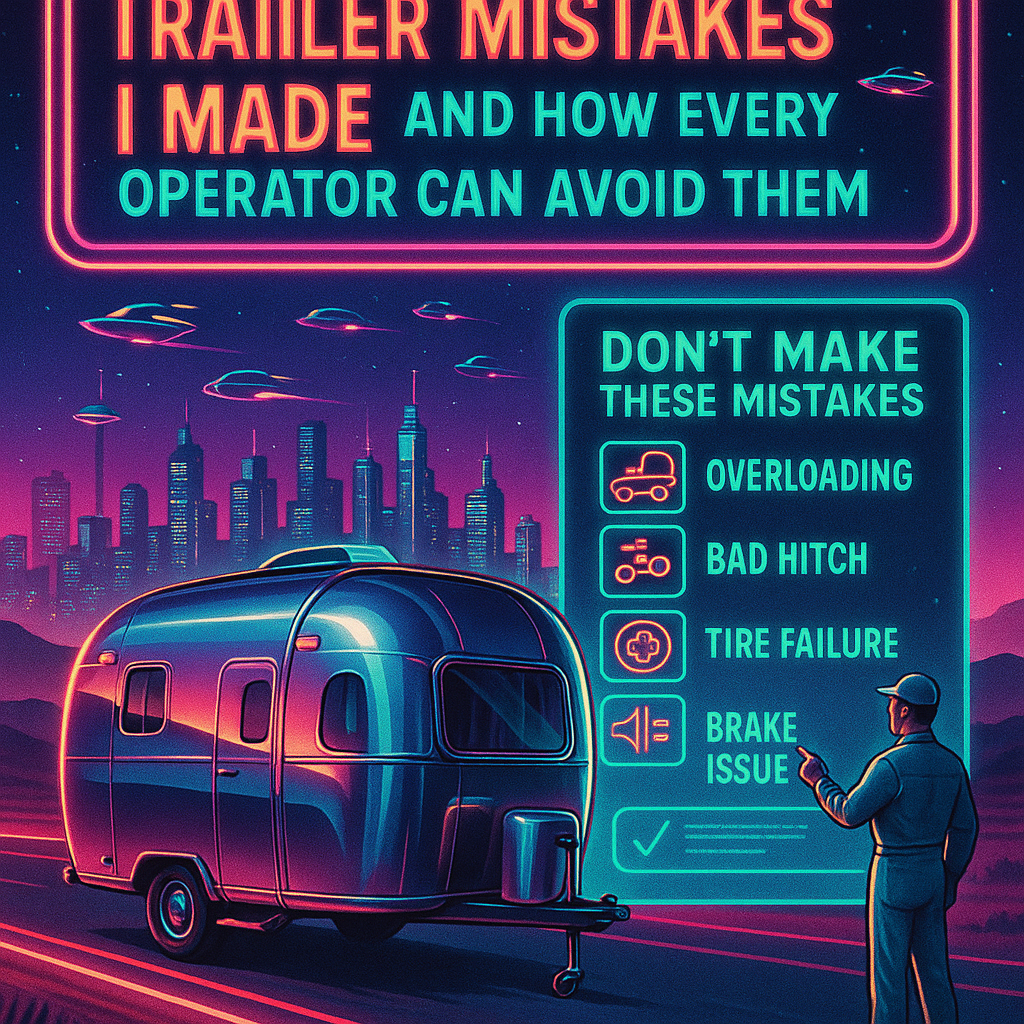
The Costly Trailer Mistakes I Made and How Every Operator Can Avoid Them
I learned the hard way that small oversights compound fast. On a wet Tuesday in April, a routine pickup turned into a day-long recovery when a trailer tire blew on the highway. That one failure cost time, a repair bill, and a missed contract. I walked away with a clear list of costly trailer mistakes and a plan to stop repeating them.
This article lays out the problems I saw in the field, the practical fixes that actually worked for a busy crew, and simple checks you can add to daily operations so a small problem never becomes a business-stopping one.
Overlooking daily checks: the small routines that prevent big failures
Daily checks feel tedious when you are behind schedule. I used to skip anything that looked cosmetic and trusted that tires, lights, and couplers were fine. That trust cost me.
Start with a focused 10-minute walkaround before you hit the road. Look for tire bulges, sidewall cuts, or uneven wear. Test every light and reflector. Feel hitch connections and safety chains for looseness. These are the high-payoff checks that catch issues before they escalate.
Make the checks tangible. Tape a laminated checklist to the trailer tongue. Mark the date and initials each time. The habit takes days to build and pays for itself the first time it prevents a breakdown.
Ignoring weight distribution and load securement: how planning saves equipment and time
One afternoon I loaded a pallet of equipment and shoved it to the back to fit another load. The trailer fishtailed on the highway. Weight distribution feels academic until it becomes an emergency.
Measure and plan load placement. Aim for 55 to 65 percent of cargo weight forward of the trailer axle on a single-axle trailer. On tandem-axle rigs, keep weight centered between axles and avoid overloading any single wheel. Use a simple bathroom scale and plank to estimate tongue weight if you don’t have a commercial scale.
Secure loads to prevent shifting. Ratchet straps with edge protectors and wheel chocks for wheeled equipment reduce movement. If you carry odd-shaped gear, create blocking patterns with scrap lumber and soft straps to keep heavy items from sliding.
Skipping regular maintenance on brakes and bearings: the slow wear that bites when you least expect it
Brakes and bearings don’t fail with fanfare. They degrade quietly. I let bearings run longer than I should because we were busy. One weekend job ended with a seized hub and a tow bill.
Schedule maintenance by miles and time. Repack wheel bearings at regular intervals, follow rotor and pad service limits, and check brake actuator travel on electric-over-hydraulic systems. Keep spares on hand: a set of bearings, a spare hub seal, and a basic brake parts kit will save hours waiting for parts.
Create a simple maintenance log. Note service dates, mileage, and parts replaced. Over a year, that record shows trends and helps you plan downtime around slow periods instead of emergency stops.
Neglecting corrosion and wiring: cheap repairs that avoid bigger electrical and structural problems
Trailer wiring runs exposed under the frame and gets battered by road debris and salt. I patched a short with tape rather than replacing a damaged section. That patch failed in heavy rain, disabling lights on a busy route.
Inspect wiring runs and protect them with split loom, conduit, or anti-chafe tape where they rub against metal. Clean and protect connectors with dielectric grease. For frames and floors, address rust early. Grind a small rusty patch, apply a rust converter, prime, and paint. Replacing a few feet of corroded metal costs much less than swapping a frame or dealing with a collapsed floor.
People and processes: training, documentation, and the quiet ROI of systems
Human error contributes to many trailer failures. I once watched a new hire hitch a trailer with a worn coupler and no safety chains in place. The hitch held, but it was a gamble.
Standardize how you hitch, load, and inspect. Train every operator to the same simple standard. Use short checklists pinned in the cab and on the trailer. Invest time in a 20-minute onboarding demonstration for new hires. That time repays itself quickly in fewer mistakes and safer loads.
Good leadership focuses on small, repeatable processes. If you want better field performance, document how you do work and then enforce the basics reliably. For wider reading on developing consistent site practices and leadership that sticks, I found practical frameworks helpful.
Simple upgrades that reduce risk and stop repeat problems
A few low-cost upgrades make a big difference. Replace worn tires with the correct load-rated units. Fit breakaway systems and test them monthly. Swap inexpensive LED lights for old incandescent fixtures to cut electrical faults. Apply reflective tape to the rear and sides of work trailers for low-light visibility.
If you manage a small operation and need to be found by local customers, learn the fundamentals of seo for listings and service pages. Clear, accurate online listings reduce the friction of booking and let you spend more time maintaining equipment and less time chasing leads.
Closing: build the routine that prevents your next breakdown
Trailers are tools that reflect how well you run your business. The most expensive mistake is treating maintenance like an afterthought. Short, repeatable checks, clear load plans, scheduled brake and bearing work, and simple corrosion prevention keep you on schedule and off the side of the road.
Start with a ten-minute walkaround and a laminated checklist. Train staff to perform the same checks. Add a maintenance log and a small spare-parts kit. These habits will turn costly trailer mistakes into rare stories you tell over coffee, not headaches that cost a day of work.
You will still face surprises. Do the small things well and most surprises stay small.
Leave a Reply