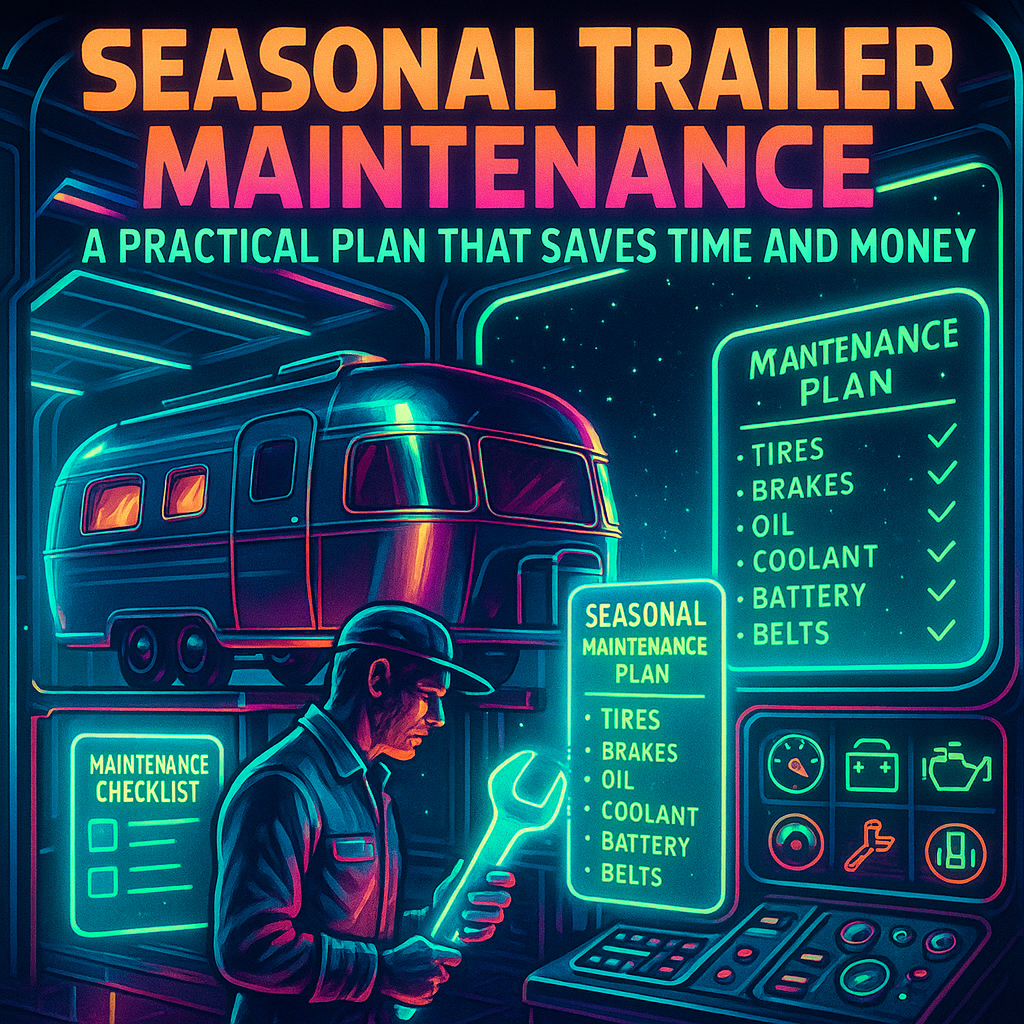
Seasonal Trailer Maintenance: A Practical Plan That Saves Time and Money
I learned the value of seasonal trailer maintenance the hard way. One spring morning I arrived at a job site with a trailer whose lights died and a seized jack. We lost two hours and a day’s profit. After that I built a seasonal routine that cut downtime and stretched trailer life.
Seasonal trailer maintenance matters because trailers sit unused, face temperature swings, and get pushed hard during certain months. A short, repeatable plan before and after peak seasons keeps trailers working as tools, not surprises.
Start with a realistic seasonal inspection routine
Begin each season with a structured but simple inspection. Make it a short checklist that anyone on your crew can run through in 10 to 20 minutes.
Focus on items that cause on-site delays. Check lights, tires, bearing play, coupler fit, safety chains, and breaks in wiring harnesses. Inspect the floor for soft spots and the frame for cracks or significant rust.
Document what you find. A date-stamped note keeps a maintenance trail and helps you spot recurring failures. If you repeat the same inspection each season, trends emerge and you catch small problems before they stop work.
Prioritize wear items and preventive replacements
Some parts wear on a calendar, not usage. Tires, wheel bearings, and breakaway systems deserve seasonal attention even if they look fine.
Tires age from UV and heat cycles. Check tread depth and weather cracking. Replace tires that show sidewall cracks or uneven wear. Wheel bearings need repacking or fresh grease intervals tied to the seasons if your trailers sit over winter.
Brakes on trailers used in cold climates can corrode and stick. Seasonally exercise and, when needed, service the brake assembly. Replace small items like light sockets and connectors before they fail on a job.
Weatherproofing and storage steps that actually work
Storage strategy matters more than fancy facilities. How you leave a trailer at the end of a season determines how much work you face when you put it back into service.
If winter storage is expected, clean and dry the trailer thoroughly. Remove any organic debris that holds moisture. Lubricate moving parts including couplers, jacks, hinges, and suspension components. Cover exposed electrical connectors with dielectric grease to keep water out.
When possible, store trailers on blocks to take weight off tires and suspension. If that is not feasible, rotate tires monthly to prevent flat spots. Elevating a trailer also helps drainage and limits rusting of the wheel well area.
Build small on-site fixes into daily routines
Big maintenance days are necessary, but many failures stem from small, repeated misses. Make tiny checks part of the daily start-up routine.
Train operators to walk around the trailer and check lights, hitch engagement, tire pressure, and load security. A two-minute inspection prevents most common roadside failures.
Use a shared log in the toolbox or a simple phone photo of any defect to record issues. That low-friction habit ensures problems get addressed on the next scheduled maintenance day rather than during a run.
Plan parts, tools, and knowledge before the busy season
A common failure is starting a season with no spare parts or the wrong tools. Before busy months, inventory spares and basic tools so repairs happen on your timeline.
Stock consumables: light bulbs, fuses, grease, bearing kits, cotter pins, and a spare tire that matches the trailer. Keep one set of service tools dedicated to trailers. When a job requires a part you don’t carry, you end up waiting for a vendor.
If you want broader operational lessons around running teams and maintaining assets, consider reading short pieces on leadership and basic seo to learn how small habits and visible records improve both field performance and how customers find you. These topics intersect with maintenance: clarity, documentation, and consistent routines scale.
Mid-season tune-ups and adjustments
Don’t wait for the season to end to service heavy-wear items. Schedule one mid-season tune-up to catch accelerated wear from peak use.
Adjust brakes, re-torque wheel studs, and recheck wiring after mud season. If you haul corrosive materials or work near salt, inspect frames and undercarriage more often.
A mid-season check keeps breakdowns out of the middle of jobs. It also reveals whether your pre-season steps need adjustment for next year.
Closing insight: maintenance is an operational discipline, not a one-off task
Treat seasonal trailer maintenance like a repeatable operational discipline. Document routines, stock the parts you use, and train crews to do fast daily checks. That combination reduces surprises and keeps trailers working as tools.
Start small. Add one seasonal checklist this month and one spare part to your inventory. Over a year you will see fewer roadside repairs, lower replacement costs, and less friction running jobs.
If you run trailers for a living, consistency beats heroics. Keep the routines simple, track what you find, and adjust season to season. You will finish jobs on time more often and keep your crew focused on work, not broken gear.
Leave a Reply