Seasonal Trailer Maintenance: A Practical Plan for Year-Round Reliability
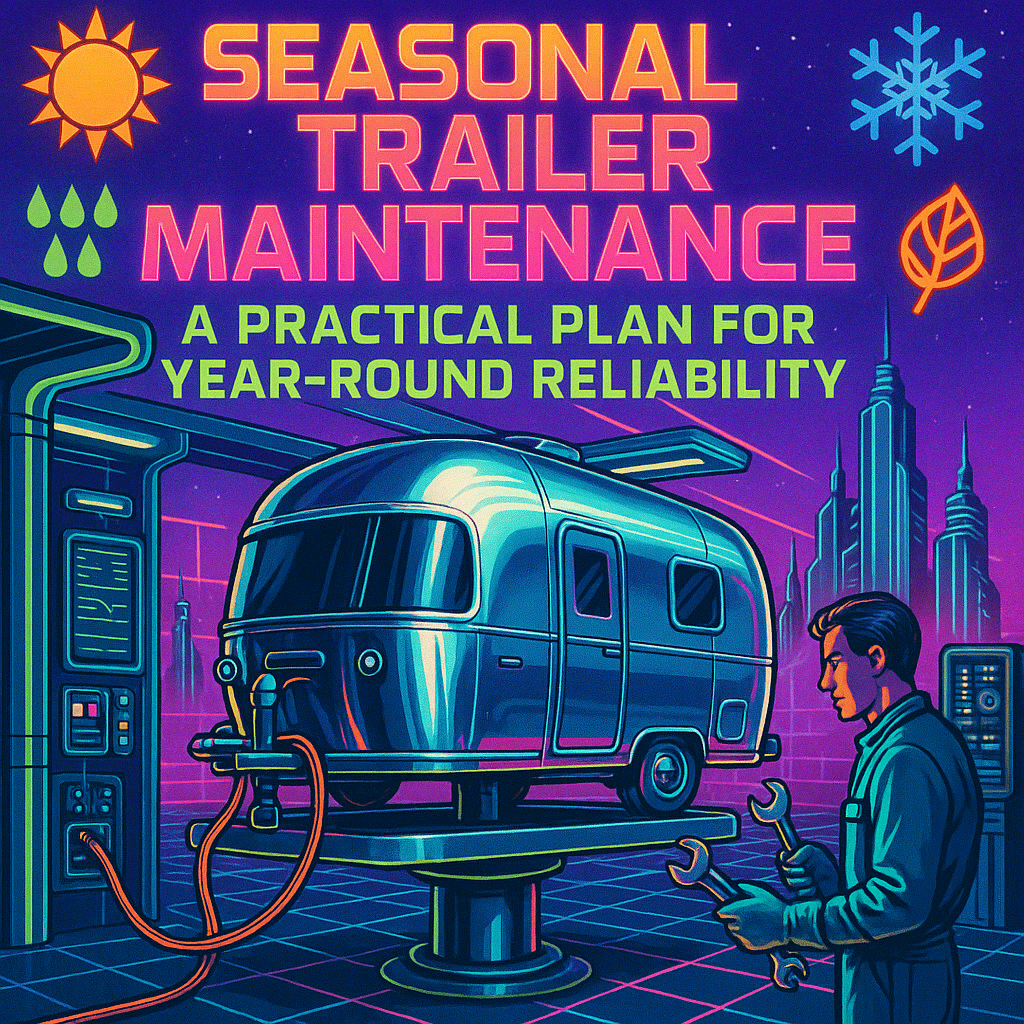
Seasonal Trailer Maintenance: A Practical Plan for Year-Round Reliability
I was running a two-trailer operation when a late autumn storm put us out of service for three days. One trailer had corroded wiring at the plug and the other had a seized jack. That week cost jobs, reputation, and a lucky client. After that I built a seasonal trailer maintenance rhythm and never lost a day to the same failures again.
This article lays out a hands-on seasonal trailer maintenance plan you can use whether you run one trailer or a fleet. The primary keyword seasonal trailer maintenance appears here because planning ahead saves money and keeps your business moving.
Why seasonal trailer maintenance matters for small operations
Trailers live outside. Weather, road salt, and storage decisions change the pace of wear. A quick inspection in spring looks different from one in late fall.
Most downtime comes from avoidable items. Bearings that were fine in July fail under wet cold in November. Lights that blink during summer rain reveal brittle wiring in winter. If you map inspections to seasons you catch problems before they become emergency repairs.
Spring checklist: reverse the winter’s damage and ready for hauling
Start spring with cleaning and a focused inspection. Winter hides corrosion and water damage. You want the trailer safe for full-season work.
H3: Brakes, bearings, and wheels
Lift each wheel and check for play. Repack wheel bearings if you see grease that went dark or watery. Test electric or hydraulic brakes on a short run before heavy loads.
H3: Lights and wiring
Inspect connectors and the harness for cracked insulation. Clean and reseal trailer plugs. Replace bulbs and lenses with visible cracks.
H3: Floor and frame
Check wooden floors for trapped moisture. Probe suspect boards and replace soft spots. Look along the frame for surface rust and treat small areas before they grow.
Summer maintenance: prevent heat and use-related failures
Summer gets busy. Preventive tasks here reduce roadside fixes and lost time.
H3: Tire care and load checks
Verify tire pressures at ambient temperature. Check for uneven wear. Rotate or replace tires that show cords or deep cracks. Confirm load ratings and never overload the axle spec.
H3: Fasteners and moving parts
Lubricate hinges, couplers, and lift mechanisms with a high-quality lube. Tighten hitch bolts, suspension U-bolts, and safety chains after the first few heavy trips of the season.
Fall prep: protect gear from salt, moisture, and freezing temperatures
Fall is the most critical season for trailer owners. Proper prep reduces winter corrosion and freeze damage.
H3: Electrical winterization
Remove and clean the plug. Corrosion often starts at contacts left damp. Apply dielectric grease to protect pins. For seasonal trailers, disconnect the battery and store it in a warm place.
H3: Drain and protect systems
Drain fresh and waste-water tanks. Flush pumps and apply preservative if units will sit. Add fuel stabilizer to onboard fuel tanks for powered systems.
H3: Grease and seal
Grease bearings and moving parts before the cold sets in. Rust inhibitors on exposed metal buys time through snow season.
Winter checks: inspections that stop worst-case failures
Put winter inspections on a short but regular schedule. Check these items before each major run.
H3: Jack and coupler function
Cold and dirt cause jacks to stick. Operate jacks under load to ensure they lift and lower without binding. Keep a small bottle of light oil in the toolbox.
H3: Trailer storage situational rules
If you store outside, park on gravel or treated wood to keep the coupler and tongue off wet ground. Cover vents and use breathable covers that shed snow without trapping moisture.
Operational lessons from routine maintenance
Routine maintenance teaches operational discipline. First, build small, repeatable tasks into every job workflow. A 10-minute walk-around at job start finds loose straps, tire issues, and lighting problems.
Second, treat paperwork like a tool. Log inspections by date and mileage. A written record shows recurring issues and helps you predict part replacement windows.
Third, invest in simple spares. A spare plug, a jack handle, and a set of wheel bearings saved my team multiple emergency stops. Keep spares in a dedicated, waterproof case.
Mid-article note on skills that matter in field teams
Skilled crews make maintenance faster and less expensive. Solid leadership trains people to notice what wears first. Basic online resources about seo for your business listing can help customers find you when reliable service matters.
A compact seasonal maintenance plan you can print
H3: Quarterly rhythm
- Spring: clean, bearings, brakes, lights, floor
- Summer: tires, fasteners, lubrication checks
- Fall: electrical winterize, drain systems, grease
- Winter: short pre-run inspections, storage checks
Do each item on a clear checkpoint sheet. Assign responsibility. If one person owns the checklist they own fewer surprises.
Closing insight: make maintenance part of your contract with clients
Reliability becomes a competitive advantage when you treat your trailer like a primary tool. Seasonal trailer maintenance reduces emergency repairs and keeps schedules predictable.
Make inspections short and regular. Keep a small bin of spares. Run a simple log. These three habits turned my operation from reactive to steady and predictable.
When you build seasonal checks into daily routines you protect revenue and reputation. That is the practical return on time spent maintaining the machine that carries your work.
Leave a Reply